It's breezy and sunny out, the kind of autumn afternoon Madrid does better than anywhere else. Under the gold canopies of the pretty tree-lined streets in Argüelles, there's the faint hum of capitalism in the air and a housing crisis run amok. Squint and tilt your head enough, and it isn't so different from Brooklyn, where one of the most critically controversially acclaimed television shows of the century was born. Girls premiered in April 2012, when I was in college, and every Sunday it was the thing I waited for, the bow on a weekend of bad decisions, the feeling of having stumbled onto the next best thing in culture and media, with storylines and punchlines that went straight into my friends' mouths by Monday and stayed there. From the gentrified streets of Greenpoint it sold us the idea of what it truly was to be a millennial under the bright lights of a big city, where the only thing that mattered was who you would become.
This week HBO announced it's coming back. Five episodes, filming in 2027, a decade after the finale. Hannah, Marnie, Jessa and Shoshanna, with Elijah along for the ride. Adam isn't on the list, and anyone who has read Famesick, Dunham's memoir from this spring, will speculate as to why, though people have been questioning the project all along. Dunham said they would only return to the show if there was a story they were burning to tell, which is well put for a show that spent six seasons edging us with bridges that needed a good burning and toxic friendship loops that never quite worked themselves out.
So, of course, we had to revisit the series altogether and unpack where exactly it went wrong and where it went right, like a bad breakup spiral at three in the morning. What impact did the unprecedented on-screen friend group Lena Dunham proposed have on the zeitgeist, whether intentional or not? Girls was subversive, sure, but its bigger achievement was dragging uncomfortable premises and fallible characters into the light at a time when television mostly wanted us to look good, and it opened the door to a new appetite for authenticity in what we watch and how we live. It paid for that up front; the backlash came before the reward, and to this day, even the people who loved it most look back and ask: what the hell was that about?
One thing we can agree on is that Girls tracks arguably the most formative years in one's life: college and the first ones after it, when everyone is trying hard to be somebody, or, as Hannah tells her parents, busy “trying to become who I am”. To stand out, to be the one with the cool project and the unique talent, the je ne sais quoi, the haircut, and, at the same time, nobody could do any of it alone. We needed our friends as a mirror, somewhere to be validated, to be given our flowers, where even being critiqued meant you held enough space to be noticed, to have plot. Though we would have died before admitting it. The pilot has Hannah's parents cutting her off, two years out of college, and Hannah answering, high and sincere, that she might be the voice of her generation, or at least a voice, of a generation. The joke was the hedge. Everyone was the main character, which meant nobody really was.
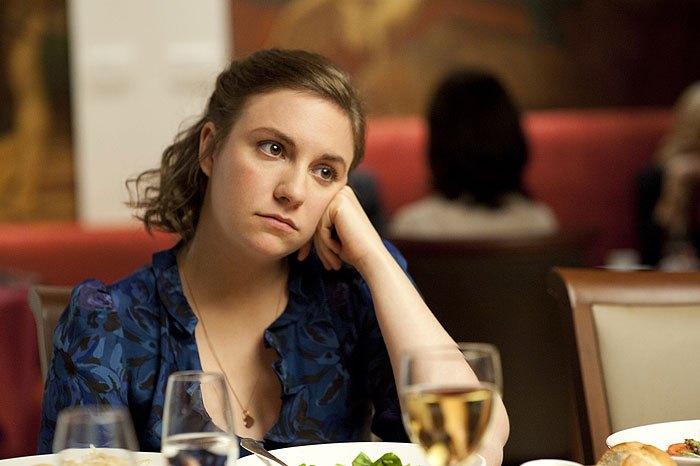
Read the group by their ARQUE types and you start to see why the dysfunction was so prevalent, and what made it so entertaining to watch.
Hannah is the Philosopher, always reaching for the meaning of the night, and when it isn't there she invents it, which is as much a creative talent as it is a crutch, a way of never having to be present, or accountable. Marnie, Hannah's not-so-best friend, is a born Architect: a plan for the evening and a plan for her life, and six years of watching both collapse in public. Jessa is the Spectre incarnate, with an enigmatic aura she does very little to deserve, and we are helplessly drawn to her anyway, here one minute, gone the next. Shoshanna runs on pure Catalyst, all speed, the one who agreed to go there with you, wherever there turned out to be; she might regret it in the morning, but you could count on her to charge everyone else's intentions until something happened. Elijah comes in as the Vigil, the one who, even as comic relief, sees most clearly through all the smoke and mirrors, and the only person honest enough to be cruel on purpose. And Adam, of course, is the Wildcard. Nobody knew where he stood on anything or what he would do next, emotionally or physically, though thankfully it was usually without a shirt on.
So what's missing? There's no Anchor here, nobody who stays put so the others know where home is tonight, nobody whose steadiness lets the rest of them be reckless, without the abandon. There's no Hearth either, nobody who notices that someone has gone quiet and pulls a chair over for the sake of connection, nobody holding the security a friendship needs to remember that everyone in it is there for each other and that the whole is supposed to be bigger than the sum of its parts. In a Shakespearean way, it was written from the start. Six protagonists is a party with six hosts and nobody on the door, and we all know how that ends. But their failure to see those gaps was the lesson Dunham was trying to teach us, or at least a reality she wanted us to see: the places where people need to turn up for each other, and the vulnerable, selfless challenge of bending their type a little so the thing they need the most can hold.
What Girls did bravely was normalise failure and setbacks and turn them into something formative, whether they were personal or social, though they tended to lean social. The group bore the brunt of one character's drama, seemingly supportive at first, then regrettably reeled into the fallout, because that's what friends are for (allegedly). Then again, your friends might just put up with you because they need someone to put up with them too. Nobody quite says it, and especially not back then, but it sits at the bottom of every brunch. Girls had the audacity to put all the messy cards right on the table, in a humour so sly and self-deprecating it sometimes tipped into self-pity, and we laughed, and then went home and read our own group chats a little differently. They were enablers. They took advantage of each other inside a bond that was real and impossible to describe, too proud or too scared to call it what it was. And it was consensual, reciprocal even, so does it qualify as friendship? The show left that part open-ended, but we rooted for them anyway, every Sunday, for the quirks, and for the tender moments that came out of nowhere and caught us off guard, because they reminded us these caricatures might be real people.
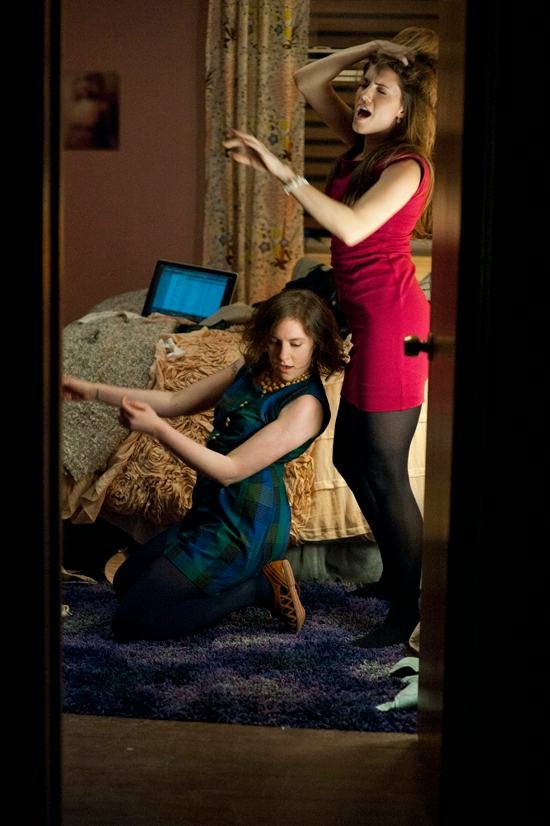
Like the night in the first season when Hannah, newly diagnosed with HPV and newly informed that her ex is gay, puts on Robyn's “Dancing On My Own” and Marnie joins her, the two of them in a bedroom, dancing alone, together, which is arguably the most accurate depiction of codependent friendship in a downtrodden decade fraught with individualism. Everyone was building a self in the public eye and calling it a personality (an influential one, at that), and the friendships that came out of it were shaped the same way. Looking back, the scene is almost haunting, and we watch its euphoria with jaded eyes: though they may share a history and a social atmosphere, in the end, they're in it for themselves.
In the last season, at Shoshanna's engagement party, Marnie architects a meeting in the bathroom to discuss the state of the friendship, as if it were a State of the Union address, inorganic and transactional; by then it's an executive function, more routine than desire, a machine they keep running out of habit. And Shoshanna, in true Catalyst fashion, says what needed saying: they can't be in the same room without one of them making it entirely about herself. The friendship ends there, with no fight, and afterwards Hannah and Jessa, the two who hurt each other most, say sorry. It's a confession, really, and the show had the nerve to let it be small, because it was simply too little, too late. That one word, the one they had needed all along, wasn't going to cut it this time, because the thing about sorry is that after you chew it up and spit it out enough times, all drained, mangled and twisted, it shrivels into a platitude, a joke begging to be taken seriously. And that's precisely where Girls shone. It didn't quite ask us to take it seriously. In fact it asked very little of us, only that we bear witness to someone's truth.
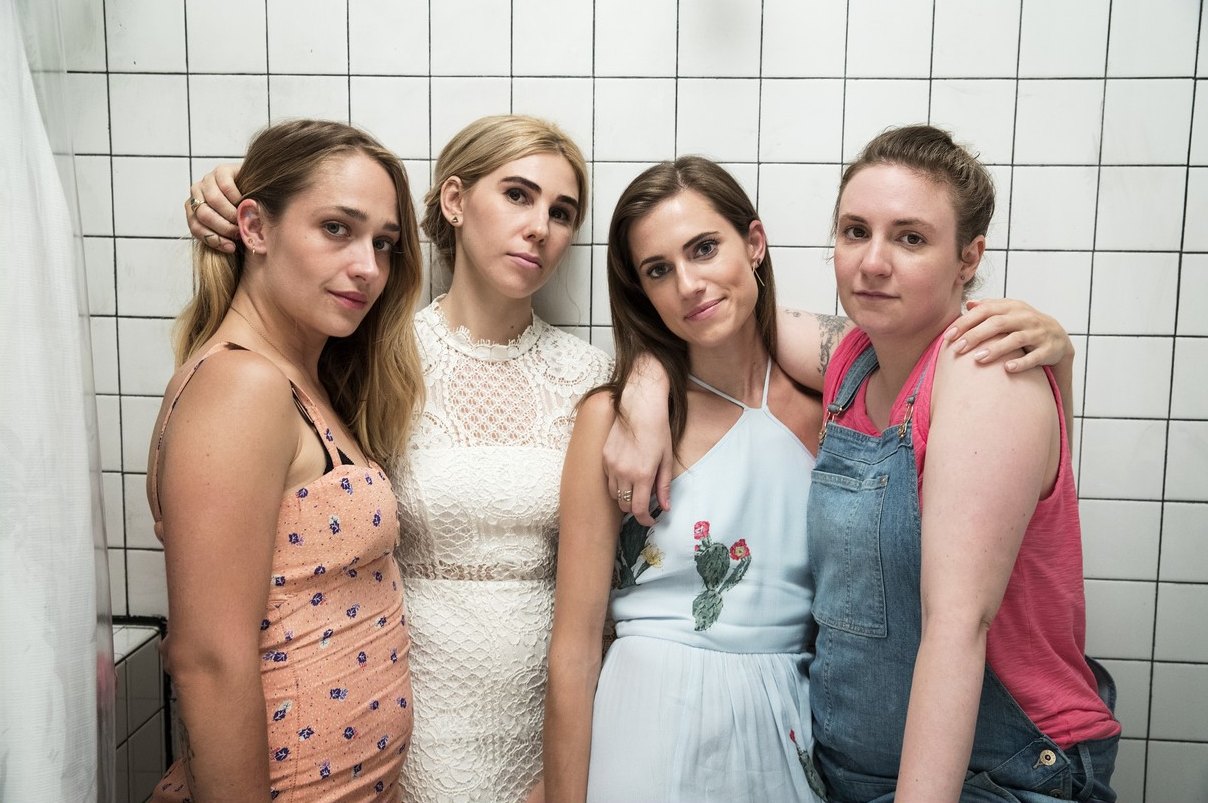
Hannah was never much of a disguise. It was widely known that she functioned as a sort of self-portrait of Dunham, of her own goals and insecurities. Artistic choices rarely come without consequences, and this one had plenty. A new wave of feminism was taking shape online, on Tumblr and Twitter, and Dunham got caught in the storm of change, landing between shades of wokeness, too much for some and not enough for others, which makes her either one of the first feminists of her generation or one of the last of a generation. For years, the criticism was louder than the show: the all-white Brooklyn, her body on screen without apology, and in 2017 a statement defending a writer from the show who had been accused of sexual assault, which she retracted and apologised for days later. In Famesick she puts her fame and her chronic illness side by side, with a rehab stay and a long relationship in the pages, and the reviews split: praise for the humour and the vulnerability, and complaints that the reckoning stops short, that her regret over that statement is too vague to land. Both are a little right, and, in an art-imitates-life kind of way, that is also what Girls asks us to accept about its characters.
Now, with the pretence of subtlety stripped away, the same generation is still trying to untangle the complexities of female friendship, this time centre stage. In 2024, Charli XCX released “Girl, so confusing”, about a relationship knotted up in comparison and ego, and then brought the supposed rival, Lorde herself, onto it to sing-talk through their insecurities and the industry that pits them against each other, admitting, though it clearly isn't easy, that they admire each other in spite of all the programming that says they shouldn't. I'm not a woman, and I won't pretend to know the weight of being told from childhood that your female friendships should be soft and/or unbreakable. But I noticed how much we all reacted to two women simply trying to work it out on the remix. The trope is still there; what's changed is that the latent misogyny of it all has been pulled into the foreground too, so we can look at these complicated dynamics for what they really are: tragic, beautiful, and the source of an undeniable bond.
So what is it going to look like in their forties? Have our ideas about friendship shifted enough in a decade that the corrosive cruelties of trying to exist for yourself and for others at the same time have become palatable, as part of the package? Could that leave room for an unconventional idea of the friend group to thrive? Will Hannah, Marnie, Jessa and Shoshanna have confronted their demons? I need to know whether they ever found out what they mean to each other, and whether they can stop being themselves long enough to become something bigger, something closer to love. Who holds the door now? Who makes room by the fire?
Maybe the anchor was never supposed to be one person. Maybe it's what a bond turns into when everyone gives a piece of themselves to it, something that can only exist between the people holding it up, and only for as long as they keep choosing it. The types are obviously an abstraction, a way of naming dynamics, and most of us carry more than one, though we move through the world with a predominant pattern. But whether we choose to change, and when, is how we show we care. The Philosopher who closes the notebook and notices that somebody has gone quiet, the Architect who lets the plan fall apart and stays anyway, the Spectre who, for once, commits, the Catalyst who slows down long enough to ask where everyone actually wants to go: each of them giving up a little of their part so that, between them, the thing that was always missing gets to exist. What comes forth, intangible but unmistakably in the room, is a new kind of protagonist: a patchwork, none of them and all of them at once, and one that can finally be the main character. That's the story I hope Dunham is burning to tell, but regardless, I'll be watching, probably with my most problematic friend group.
La Q · Madrid
What type are you?Which Girls character are you? →